PIBULJ
Marketing your Practice: News Update: Cookie Control Compliance - Jenny Cotton, Mortons Marketing

08/06/12. A KPMG survey update of UK business compliance with the Cookie Control regulations reported in the Financial Times shows that only 1 in 5 firms are fully compliant - is your practice? Since 26th May all UK businesses are responsible for ensuring that users of their websites have agreed to the use of cookies.
Has your practice checked what cookies are used?
Have all your practice contacts given permission for use of cookies?
Have you been asked to confirm acceptance of use by...
Image ©iStockphoto.com/whitemay
Read more (PIBULJ subscribers only)...
Heads, Sand, Ostriches and all that... - Carl Waring, Solicitor
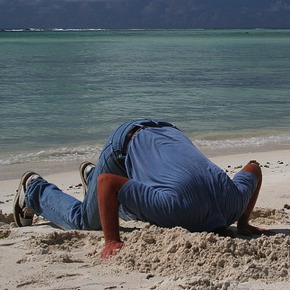
04/06/12. A short article by John Hyde in the Law Society Gazette (May 14th 2012) entitled Prepare for 50% fee cuts, Says 'end of lawyers' professor produced the expected wide range of reaction to the predictions of Professor Robert Susskind. In the article Hyde outlines how Susskind, in an address to the Law Society Management Conference, warned that the economic climate will force clients to seek out firms that embrace the technological advances available in the legal profession to enable them to reduce their legal costs. Susskind argued that bosses of both small and large companies will seek to reduce their legal spend by 50% over the next five years, as they look for ways of gaining 'more for less' through new pricing structures. Susskind went on to argue that there would be casualties amongst smaller firms and sole practitioners unless they are prepared to embrace new technologies, but for those prepared to embrace the new models, opportunities abound.
So it came as no surprise then that the first three...
Image from tropical.pete at flickr.com/photos/12023825@N04/
Read more (PIBULJ subscribers only)...
Elder Mediation - Steve Hancox, ADR Group Accredited Civil & Commercial Mediator

01/06/12. On 11th – 13th June the University of Strathclyde hosts the “5th World Summit and Symposium on Elder Mediation”, but when I mentioned Elder Mediation at a mediators’ lunch a few weeks ago the expression floated away on a sea of blank faces. No-one knew what I was talking about.
Pioneered in Canada more than 20 years ago, the benefits of this branch of mediation are gradually becoming recognised further afield. Elder Mediation Canada (and the related Elder Mediation International) are still at the forefront, with specialist certification and a distinct “Code of Professional Conduct for Mediators Specialising in Issues of Aging”, but a number of organisations and individual mediators are offering this service (and training) in the UK.
So what is “Elder Mediation”? There is a long history of mediation by elders. Christopher Moore refers to...
Image ©iStockphoto.com/onurdongel
Read more (PIBULJ subscribers only)...
May 2012 Summary
NEWSLETTER
Industry NewsSummary of Recent Cases - Substantive Law
Summary of Recent Cases - Costs
Summary of Recent Cases - Civil Procedure
PI Practitioner
LAW JOURNAL
Editorial: The Irresistible Force and the Immovable Object - Aidan Ellis, Temple Garden ChambersIn Armstrong and Connor v First York (2005) EWCA Civ 277, which will be familiar as a leading authority on low velocity impact cases, the trial Judge was confronted by two apparently truthful claimants, who said that they had suffered an injury, and an apparently convincing expert, who concluded that they could not have suffered an injury. The irresistible force met the immovable object. The claimants and the expert could not both be correct and the Court was therefore forced to choose between them.
Personal Injury Articles
Child Car Seats and Contributory Negligence - Tim Kevan
Lawyers for a wrong-doer are never short of ways of ways of pointing the finger of blame elsewhere and Emma Hughes (by Anne Marie Armstrong) v Estate of Dayne Joshua Williams, deceased (Defendant) and Louise Williams (Third Party) [2012] EWHC 1078 was just such a case. In that case a mother had fitted her car with two child seats. One was a forward facing child seat and one was a booster seat. In the case there was not a big dispute that if the child had been in the child seat the injuries sustained would only have been minor. However, the child was in the booster seat despite the fact that this went against the instructions set out by the manufacturer of the seat in terms of age, height and weight. Sadly more serious injuries were sustained and the Defendant argued that the mother should be liable for a contribution of 25% pursuant to the Civil Liability (Contribution) Act 1978..
When is an Offer Not an Offer? - Sarah Prager, 1 Chancery Lane
The Court of Appeal has recently explored whether, and to what extent, offers must be made in accordance with the provisions of CPR Part 36 if they are to have the consequences set out in that Rule. Sarah Prager explores the ramifications of the decision in PHI Group Limited v Robert West Consulting Limited [2012] EWCA Civ 588.
Whiten v St George’s Healthcare NHS Trust [2011] EWHC 2066 (QB): Part 2 - William Latimer-Sayer, Cloisters
In the second part of this article I continue to highlight some points arising from Swift J’s judgment in Whiten v St George’s Healthcare NHS Trust [2011] EWHC 2066 (QB).
Whitehall Whiplash DIscussions - Susan Brown, Prolegal
Insurers and the government met again at this month at a much heralded Whitehall summit to discuss, amongst other things, whiplash claims. They seem to be going round in ever decreasing circles. The headlines suggest it is an accepted fact that insurance premiums are £90 higher because of bogus whiplash claims. This strikes me as highly unlikely. There is of course fraud in this area as in any other type of insurance claim, but if insurers were paying out at that level, it would suggest a ludicrous level of incompetence on the part of insurance companies in vetting the claims. No-one actually knows the level of fraud, and insurers, as a suspicious bunch, probably think it is far higher than it is, whereas a naïve and trusting claimant lawyer may think it is relatively low and that most people are decent and honest and will not make fraudulent injury claims, no matter how many calls they receive from claims management companies to whom their details have been passed by their insurers.
The Taylor Review - David Taylor, Forum of Insurance Lawyers
In May of last year Sheriff Principal Taylor began a review of the expenses and funding regimes of litigation in Scotland. The Taylor Review was commenced under the recommendation of the Lord Justice Clerk, Lord Gill, to conduct an independent inquiry into the expenses regime of civil litigation in Scotland and its funding in the context of the recommendations of the Scottish Civil Courts Review. With the consultation now closed, it falls upon Sheriff Principal Taylor to incorporate the responses he invited from the legal world before submitting his final report to Scottish Ministers for further consideration.
Credit Hire Articles
The Need to Hire in Credit Hire Cases - Jason Prosser, Credit Hire Advocacy Services
There can surely be few, if any, defences filed in a credit hire action which do not “put the claimant to proof” of need for a hire vehicle. Equally, when the claim involves a prestige or sports vehicle the claimant will be put to proof of the need to hire a vehicle of that particular standard or specification. In the words of Lord Mustill in Giles v Thompson [1994] 1AC:
Local Authority Liability, Edited by Daniel Tobin, 12 King’s Bench Walk
Josie Lawrence v. Kent County Council [2012] EWCA Civ 493 - Daniel Tobin, 12 King’s Bench Walk
The Claimant was an elderly lady who tripped on a raised manhole cover. The evidence at trial was that the cover was raised by between 10 and 15mm. Kent County Council ('KCC') was the relevant highway authority in respect of the section of footway upon which the Claimant suffered her accident. KCC operated a highways safety inspection regime, whereunder they defined 'actionable' footway defects as those which exceeded 20mm in depth.
Medico-Legal Articles, Edited by Dr Hugh Koch
Lie-catching and Deception Detection - Jon willows, Louise De Haro and Hugh Koch
Being able to detect deceit is critical in the civil and criminal justice systems as well as in many clinical and applied settings. We all know, however, how difficult this can be. In a recent paper in Legal and Criminological Psychology, Kristine Peace and Sarah Sinclair discuss how this multifaceted process challenges us all. They investigated whether there was what they refer to as an "emotive truth bias" operating in deception detection such that we are we more likely to judge...
When does fear become phobia? Diagnosing a Specific Phobia of car travel. - Dr Kathryn Newns
The authors have discerned a pattern in post-trauma victims in that those that remain off work for long periods of time appear to take longer to recover from traumatically-induced psychological problems, and in particular mood disturbance. They also find the psychological symptoms more distressing and debilitating than do people who return to work quickly. This appears to be true irrespective of the reason that the person does not attend work e.g. incapacitated by injury, not in employment or education.
Marketing for Solicitors
Marketing your Practice: Business Continuity - Jenny Cotton, Mortons Marketing
Crisis? What Crisis? Be prepared or face the consequences. After years of careful strategic planning and staff training is your practice really prepared? Can plans be flexed quickly? Who predicted a swimmer at the Oxbridge Boat race? Are the University of Delft experts correct that Iceland is due another and much bigger volcanic disturbance than that of 2 years ago? The CMI Chartered Management Institute members’ recent Business Continuity survey results indicate likely issues identified and plans prepared. Is your practice ready?
Article Marketing: ‘If it is on the internet it must be true!’ - Mike Massen, Gartons Solicitors
The decline in the sales figures for newspapers can be directly attributed to the increased use of the internet as a source of information and knowledge; this is reflected by the increased use of on-line newspaper sites. You can use this to your advantage and become a recognised expert in your field of law.
Extras
Babybarista: Leveson-lite
Article Marketing: ‘If it is on the internet it must be true!’ - Mike Massen, Gartons Solicitors

29/05/12. The decline in the sales figures for newspapers can be directly attributed to the increased use of the internet as a source of information and knowledge; this is reflected by the increased use of on-line newspaper sites. You can use this to your advantage and become a recognised expert in your field of law.
A great way to get exposure and increase your perceived expertise with the public is by way of article marketing. Article marketing is not the same as PR as you are not reliant upon a third party to decide whether your article is worthy of publication; it is an easy and free way to show the information seeking public that you know what you are talking about and, more important, you can...
Image ©iStockphoto.com/Photoevent
Read more (PIBULJ subscribers only)...
More Articles...
- Josie Lawrence v. Kent County Council [2012] EWCA Civ 493 - Daniel Tobin, 12 King’s Bench Walk
- Editorial: The Irresistible Force and the Immovable Object - Aidan Ellis, Temple Garden Chambers
- When is an Offer Not an Offer? - Sarah Prager, 1 Chancery Lane
- When does fear become phobia? Diagnosing a Specific Phobia of car travel. - Dr Kathryn Newns


![Appeal judge rules that credit hire company has no costs liability following a finding of fundamental dishonesty in personal injury case: RSA v. Fastrack Solutions Limited [2023] 4 WLUK 92 - David Bowden, Erimus Chambers](/content/images/resized/images/stories/carkeys_72_72.jpg)


