PIBULJ
Expertly Selecting Experts - Bill Braithwaite QC, Head of Exchange Chambers

08/06/13. Selecting experts in catastrophic injury claims crops up again and again – not surprisingly, because they are so important. It is always interesting, though, to see their different approaches to problems in the management and rehabilitation of people who have suffered, particularly, catastrophic brain injury.
I had it emphasised to me recently that my expert had “given way” significantly on the nature and extent of the equipment needed by the claimant. What that defendant may not have realised was that, because my expert is trained in the provision of care, she is perhaps less firm on equipment – however, as care is by far the largest element of most catastrophic claims, my expert was likely to prevail over the defence occupational therapist, who is not expert in the provision of care.
So we might lose £100,000 on equipment, and gain £1 million on care!
Bill Braithwaite QC
Head of Exchange Chambers
This article was first published at http://billbraithwaite.com/blog/
Image ©iStockphoto.com/kali9
Referees & Liabilities - John van der Luit-Drummond

07/06/13. Examining the liabilities of match officials for catastrophic injuries arising in sport following the leading cases of Smoldon v Nolan, and Vowles v Evans. Benjamin Smoldon, the claimant, was aged seventeen when he suffered serious injury while playing hooker in a Sutton Coldfield under-19s rugby match on 19th October 1991. While in a scrum which collapsed his neck was broken. Smoldon claimed damages against the first defendant, a member of the opposition team, and furthermore against the second defendant, who was the referee...
Image cc flickr.com/photos/manc72/8036430613/
The Return of Fettes v Williams? - Zachary Weaver-Shojaie, MWG Solicitors

06/06/13. The issue of impecuniosity has already gained notoriety for its lack of a certain definition. With varying approaches taken within Lagden v O’Connor itself, the issue has been one open to debate and is often reliant on the Court’s involvement for settlement. Since Lagden, many have awaited a more certain definition. This has, to date, remained outstanding, and it is submitted that convolution, rather than clarification, is on the horizon...
Image ©iStockphoto.com/michellegibson
Limitation, Discretion and the Burden of Proof - Andrew Roy, 12 King’s Bench Walk

05/06/13. Case Comment: Sayers v Chelwood (Deceased) and Chelwood [2012] EWCA Civ 1715; [2013] 2 All E.R. 232; [2013] P.I.Q.R. P8. This case helpfully provides a final answer to the question whether a Claimant seeking under s33 Limitation Act 1980 to disapply the s11 statute bar should face a very heavy burden in doing so. The answer, in short is, no.
Facts
From 1981 the claimant had worked for the defendants, Lord and Lady Chelwood, as a gardener with responsibility for maintaining a large garden and forest. This entailed the use of noisy equipment...
Image ©iStockphoto.com/Lya_Cattel
Instructing a Photographer: Practice Points From a Clinical Photography Expert - Tim Zoltie, Director of Clinical Photography UK & Clinical Photographer at Leeds Teaching Hospitals
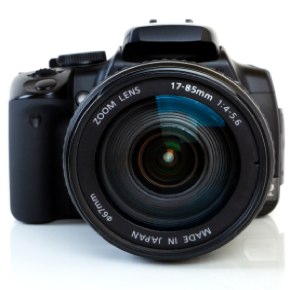
04/06/13. A photograph of an injury can be a powerful and effective tool in its ability to depict severity, and its subtle ability to evoke a sympathetic understanding of suffering and pain which would otherwise be difficult to portray verbally or in a written report. Unfortunately for many cases it can also be a hindrance. Poorly taken photographs can lead to inadmissible evidence which may in turn delay settlement. The demand for accurate photographic evidence has now meant many solicitors are turning to the instruction of a photographic expert, but who should be instructed for this work and why? Any photographs taken are classed as evidence and therefore...
Image ©iStockphoto.com/eskymaks
More Articles...
- Liability for Defective Premises - Andrew Roy, 12 King’s Bench Walk
- Rare s 33 Success for Defendants - Ivor Collett, 1 Chancery Lane
- Extensions of Time in the New (Post-Jackson) World - Robert Vernon, 9 Park Place Chambers
- Jackson Reforms in Litigaton Procedure and the Competent Medico-Legal Expert - Giles Eyre, 9 Gough Square


![Appeal judge rules that credit hire company has no costs liability following a finding of fundamental dishonesty in personal injury case: RSA v. Fastrack Solutions Limited [2023] 4 WLUK 92 - David Bowden, Erimus Chambers](/content/images/resized/images/stories/carkeys_72_72.jpg)


